


Plastic is rarely considered a material with much value once it has been used. For Defy Design, that is exactly where the conversation begins.
Winya’s collaboration with Defy Design explores what can happen when Australian plastic waste is treated as a design resource rather than an end product. By combining Defy’s work with recycled HDPE and Winya’s experience in commercial furniture design and local manufacturing, the partnership has led to two distinct furniture ranges: REDEFINE and WINGARA.
While the ranges approach the material differently, they are connected by the same idea. Materials already in circulation can be recovered, remade and designed into furniture.
Defy Design works with Australian post-consumer and post-industrial HDPE plastic, processing it into solid sheets that can be used much like other panel materials, as well as small home objects.
The result does not try to hide where it came from. Variations, flecks and shifts in colour become part of the surface, giving each piece a character that comes directly from the recycled material.
For commercial furniture, this opens up an interesting opportunity. Instead of recycled content being hidden inside a product, it becomes the hero..
The collaboration with Defy gives Winya an opportunity to work with the material in two ways. The first was to introduce it into existing Winya table designs. The second was to develop furniture where recycled HDPE was central to both the construction and the story of the product.
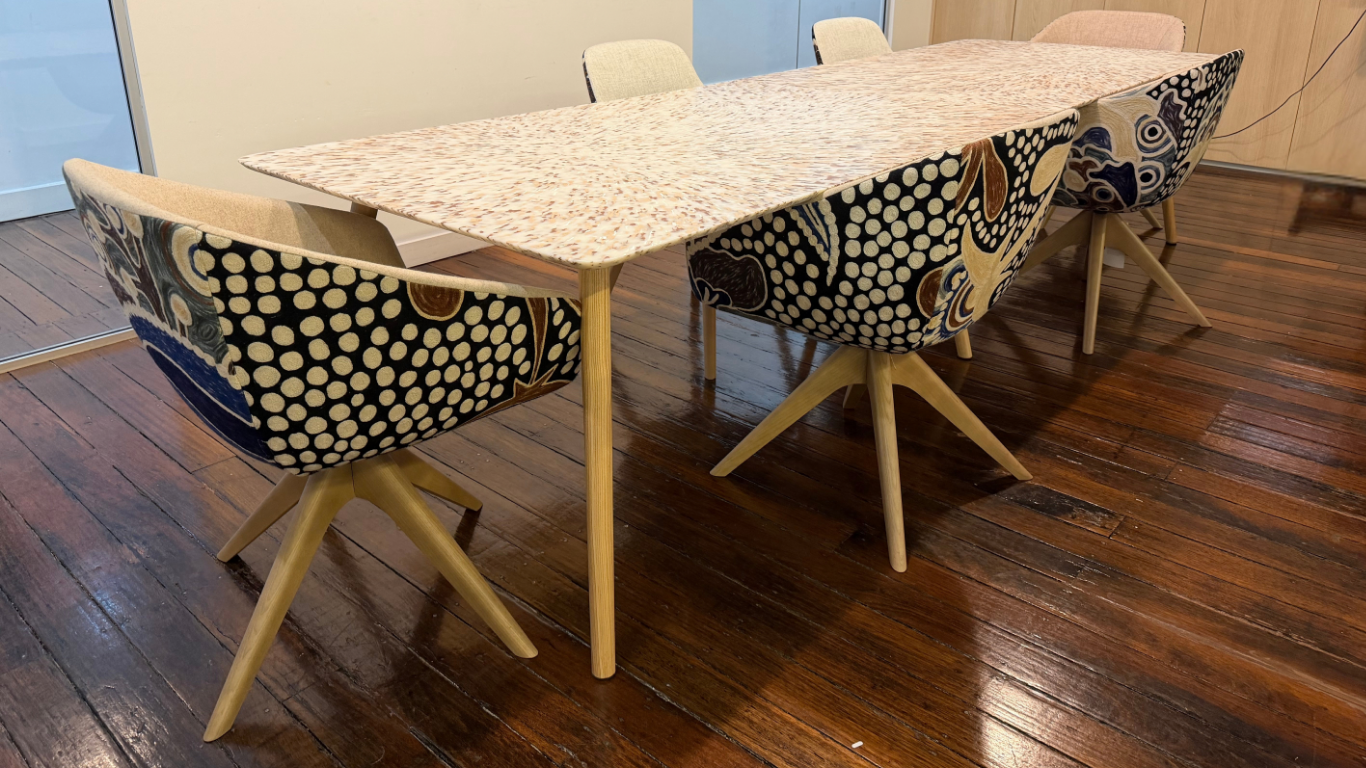
The REDEFINE range takes some of Winya’s existing table forms and reworks them with tops made from 100% recycled HDPE.
The range currently includes the REDEFINE Drum, REDEFINE Disc and REDEFINE FX tables, pairing Defy’s recycled surface material with Winya’s commercial table bases.
The approach is deliberately simple. Rather than redesigning an entire table for the sake of using recycled material, REDEFINE looks at where material choices can be changed within furniture that already performs well in commercial environments.
This allows the recycled HDPE surface to become the focus.
On the Drum table, the solid metal base provides a strong visual counterpoint to the recycled top. The Disc table pares the form back further, with a simple pedestal and disc base placing emphasis on the surface above. The FX table introduces a lighter architectural frame through its splayed metal legs.
Across each version, the same material takes on a slightly different character depending on the scale, shape and base beneath it.
It is also an example of how circular design does not always require starting again. Sometimes it means taking a familiar product and reconsidering one of its most material-intensive components.
WINGARA takes a different approach.
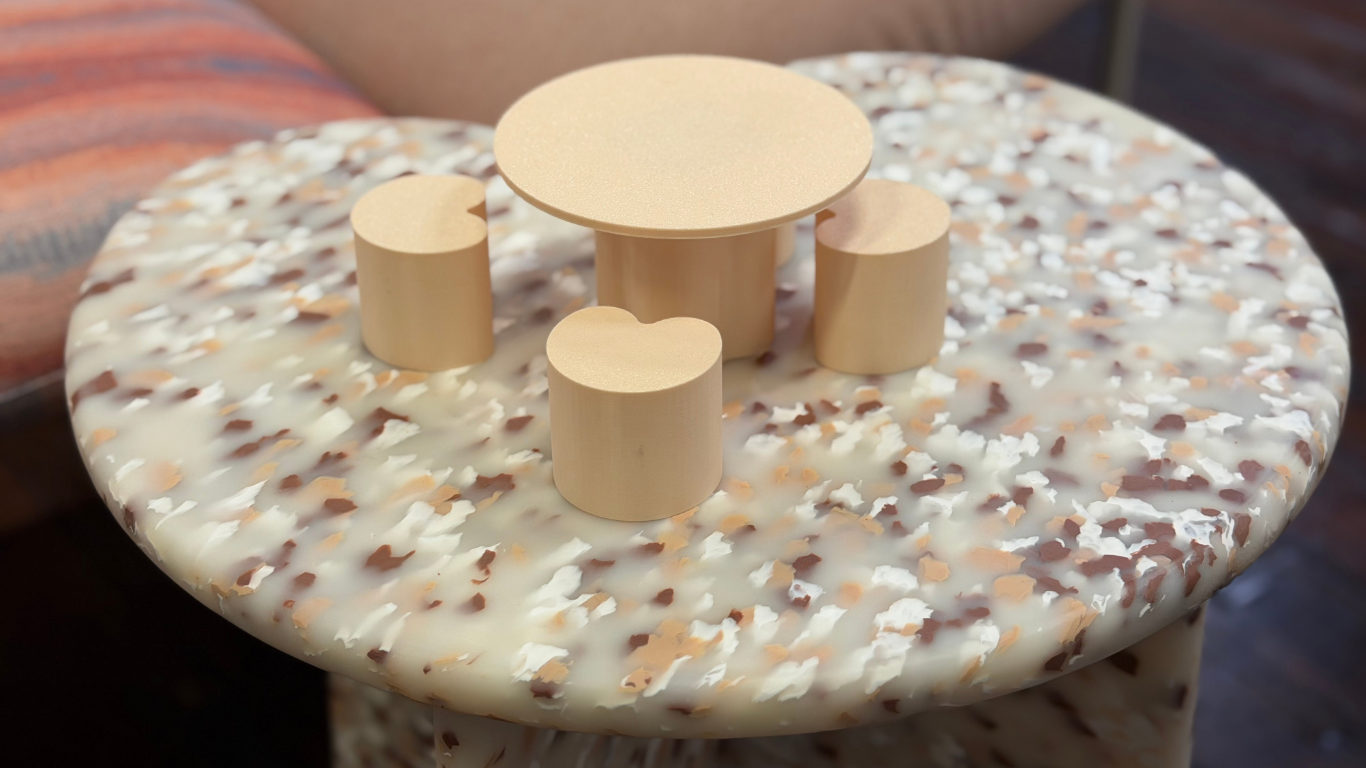
Rather than introducing recycled HDPE into an existing furniture system, the table and stools are made entirely from the material. This allowed the design to develop around the qualities of the recycled sheet itself, while also creating a clear relationship between the furniture’s form and its meaning.
Wingara means ‘to sit’ in Wiradjuri.

The design centres on the idea of people coming together around a meeting place. The U-shaped form of the stool represents a person or people, while the circular table represents the place where people gather, learn, share and nurture.
Individually, each element is simple. Together, the forms complete the story.
The people sit around the meeting place. Through gathering, conversation and exchange, they create a connection that could not exist in the same way individually.
That idea informed WINGARA as both a piece of furniture and a setting for interaction. The stools are designed in relation to the table, and the table exists in relation to the people around it.
Making the range from recycled HDPE adds another layer to that relationship. A material made by bringing together recovered plastic becomes furniture designed around the idea of gathering, together with a material which offers a true circular economy.
The collaboration is not limited to REDEFINE and WINGARA. The same recycled HDPE material can be adapted across other Winya products and developed into custom applications, allowing the partnership to extend well beyond a fixed collection.
One example is a laptop table integrated into our Yanada modular lounge setting. Using a smaller version of the WINGARA stool top with a movable arm, the recycled HDPE becomes part of the wider furniture system rather than a standalone feature.
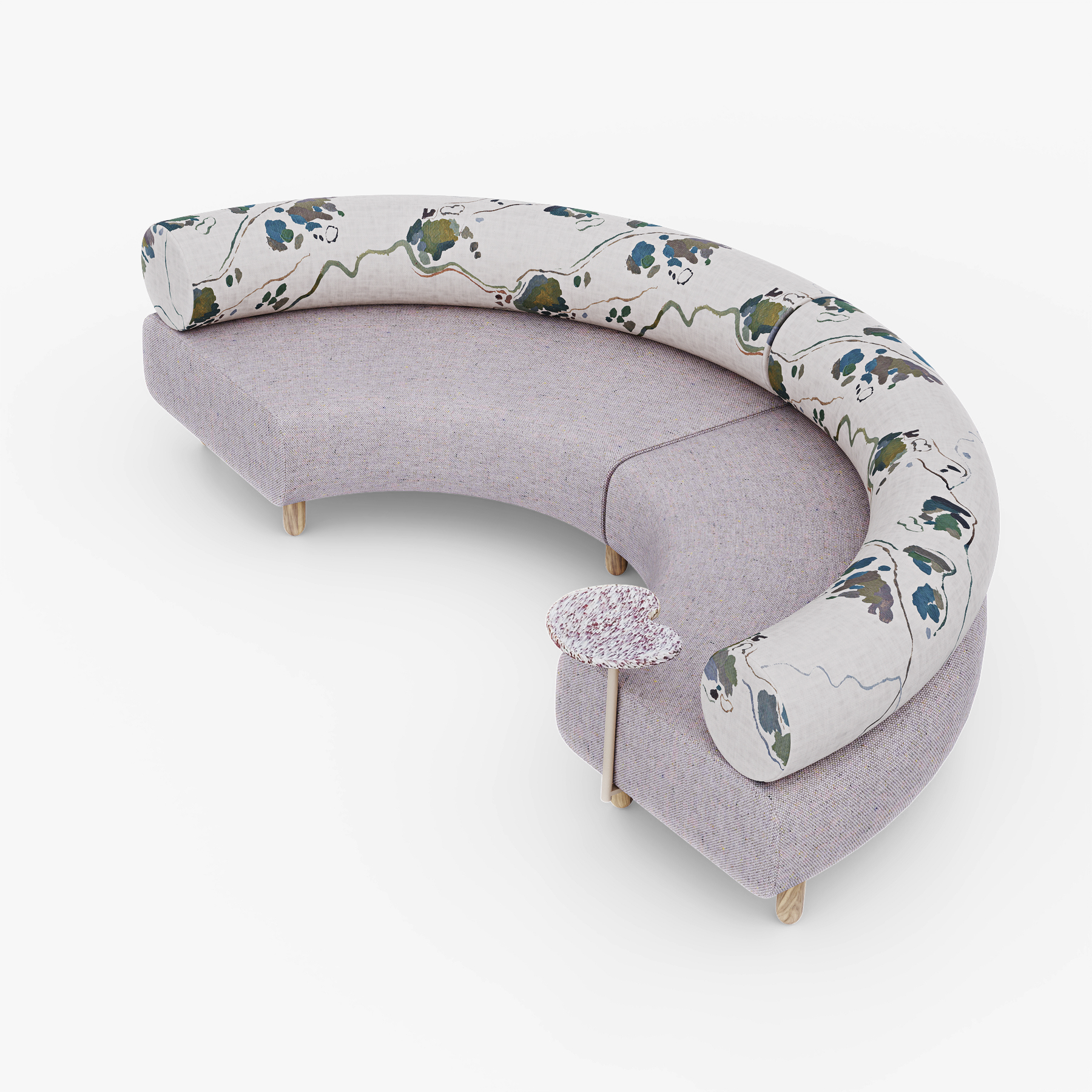
This flexibility creates opportunities to use the material across tabletops, accessories and integrated elements, giving designers and clients more ways to introduce recycled content into commercial interiors. It also allows the collaboration to keep evolving through new applications, rather than being defined only by the products already released.
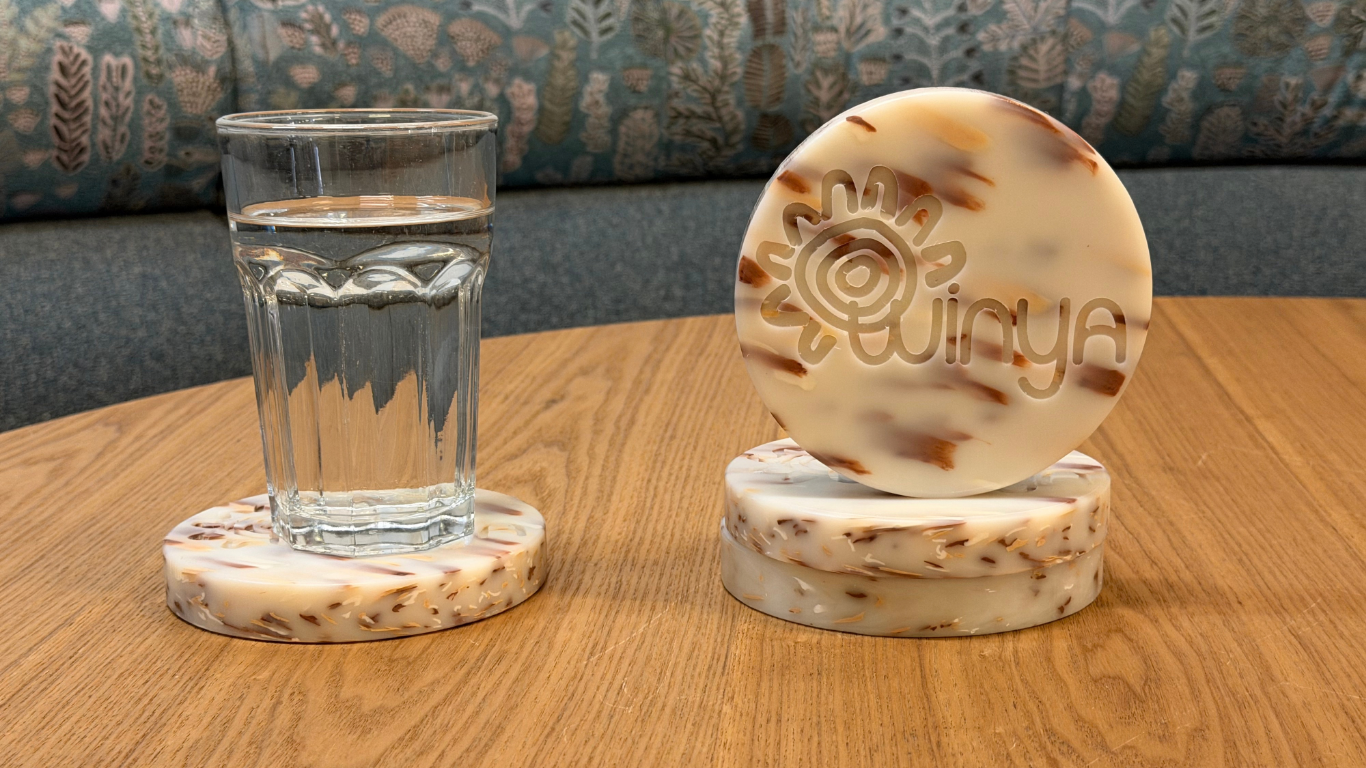
Though few and far between, the leftover off-cuts are used to create coasters for us to use around our showrooms and to give away at industry events. Our collaboration with Defy, is intrinsically mindful throughout procurement, design, manufacturing, and end-of-life, making it a tangible expression of our shared values.
REDEFINE and WINGARA came from the same collaboration, but they demonstrate two different ways of working with recycled materials.
REDEFINE asks how a new material can be incorporated into furniture systems that already exist.
WINGARA asks what can be created when the recycled material itself becomes one of the starting points for the design.
Both approaches are important.
For the commercial furniture industry, moving towards a more circular model will not come from a single type of product or material. It requires looking closely at what furniture is made from, where those materials come from, how products are manufactured, how long they remain useful and what can happen to them at the end of that use.
At Winya, this thinking sits alongside our broader work in local manufacturing, product development, repair, take-back and material recovery.
The collaboration with Defy Design is one part of that work. It gives plastic that has already had a life in Australia another use, while allowing designers and clients to see that material clearly in the finished furniture.
What was once waste becomes the tabletop people work around, the meeting table they gather around or the stool they pull up to join a conversation.
What are you looking for?